

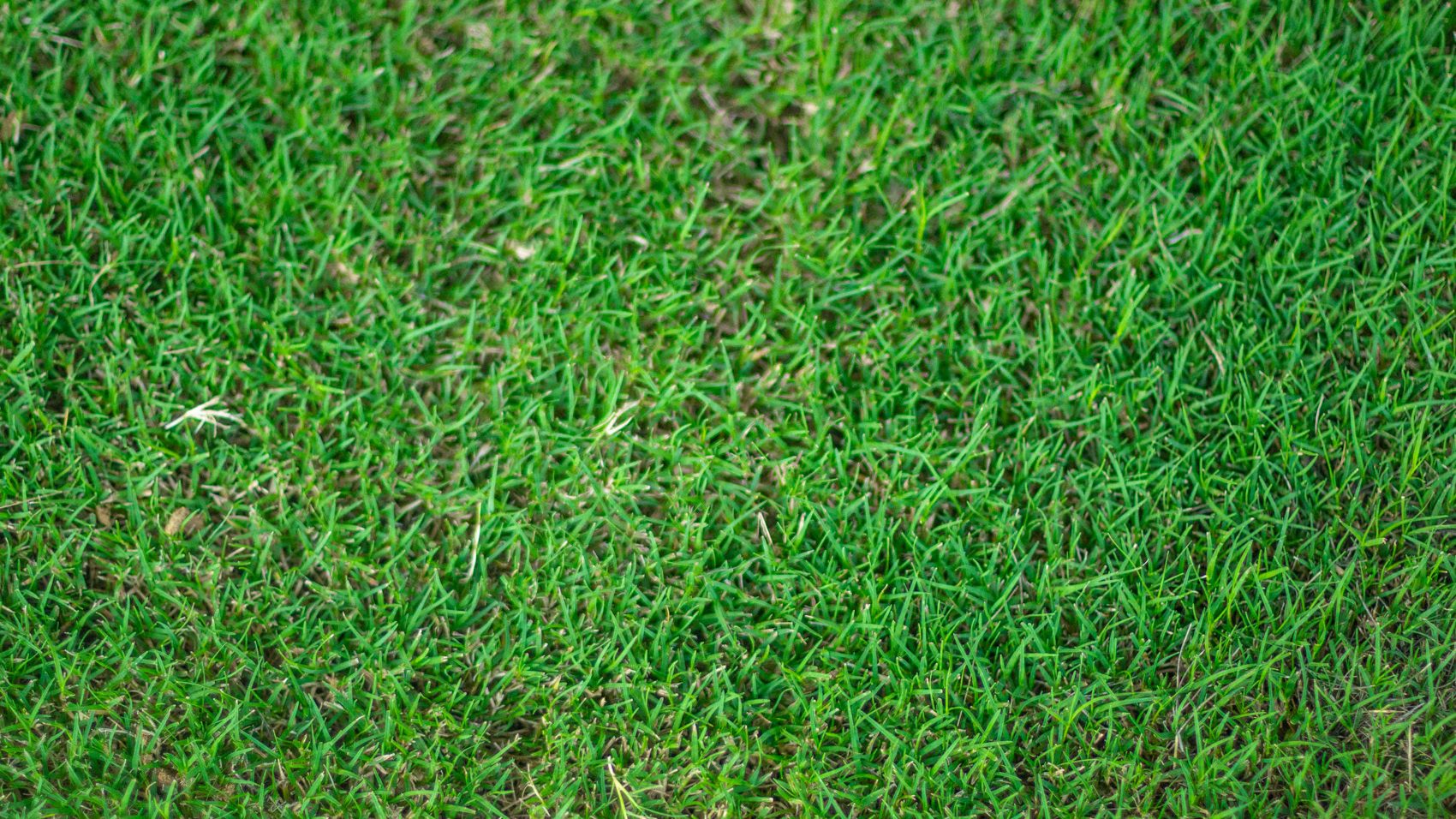
Somebody puts in a pool. A trench goes through the front yard for a water line. A tree comes out and takes a good piece of lawn with it. What's left is a yard with a hole in it that needs filling.
The natural instinct is to buy sod that looks like the grass around it. That's the step worth slowing down on, because looking like it isn't the same as being it.
Looking like it isn't the same as being it.
Why a close guess isn't close enough
Two zoysias side by side can be clearly different once they knit together. Zeon runs fine and dense at under two and a half millimeters of blade. EMPIRE is roughly twice that. On a pallet both read as green.
Across species it's more pronounced again. A bermuda blade and a St. Augustine blade are a factor of three apart in width, and the two grow into quite different habits over a season.
A near miss often looks acceptable the first year, which is the part that catches people. The seam tends to declare itself the following summer, once both grasses have settled into themselves.
Bring us a plug
Cut a piece about the size of your palm, an inch or two deep so the roots come with it. Take it from the middle of the lawn rather than the edge, where you're more likely to pick up whatever has crept in from the verge or from next door.
Bag it so it doesn't dry out on the way over. There's no appointment and there's no charge.
What we can tell you from it
What species it is, first. That alone narrows the choice substantially and it's the most useful single thing to know.
Whether it looks healthy, second. Occasionally the lawn somebody wants to match is itself struggling, and that's worth knowing before new turf goes in beside it.
And what we carry that will sit well next to it. Sometimes that's an exact variety match. More often it's the closest thing in blade width and growth habit, and we'll tell you how close that's likely to look once it has grown in.
What blending in actually looks like
Even an exact variety match doesn't disappear on day one. New sod and established lawn differ in color and density for a while, because one has been growing in place for years and the other was cut this week.
What you're looking for is a repair that closes up over a season rather than one that stays visible indefinitely. A correct match gets less noticeable every month. A near miss tends to get more noticeable, which is why the species question is worth settling first.
If we don't have a match
Sometimes the existing lawn isn't something we carry. Older lawns in this area sometimes aren't.
If that's the case we'll say so, and the more useful conversation becomes where to put the seam so the change reads as a deliberate edge rather than a repair. That's a conversation worth having before anything is cut.
It's the cheapest step in the job
Two minutes at the counter with a bag of your own lawn is the least expensive part of the whole project, and it's the one that decides how the finished job looks a year later.
Bring the plug. Everything after that is easier.
← All posts